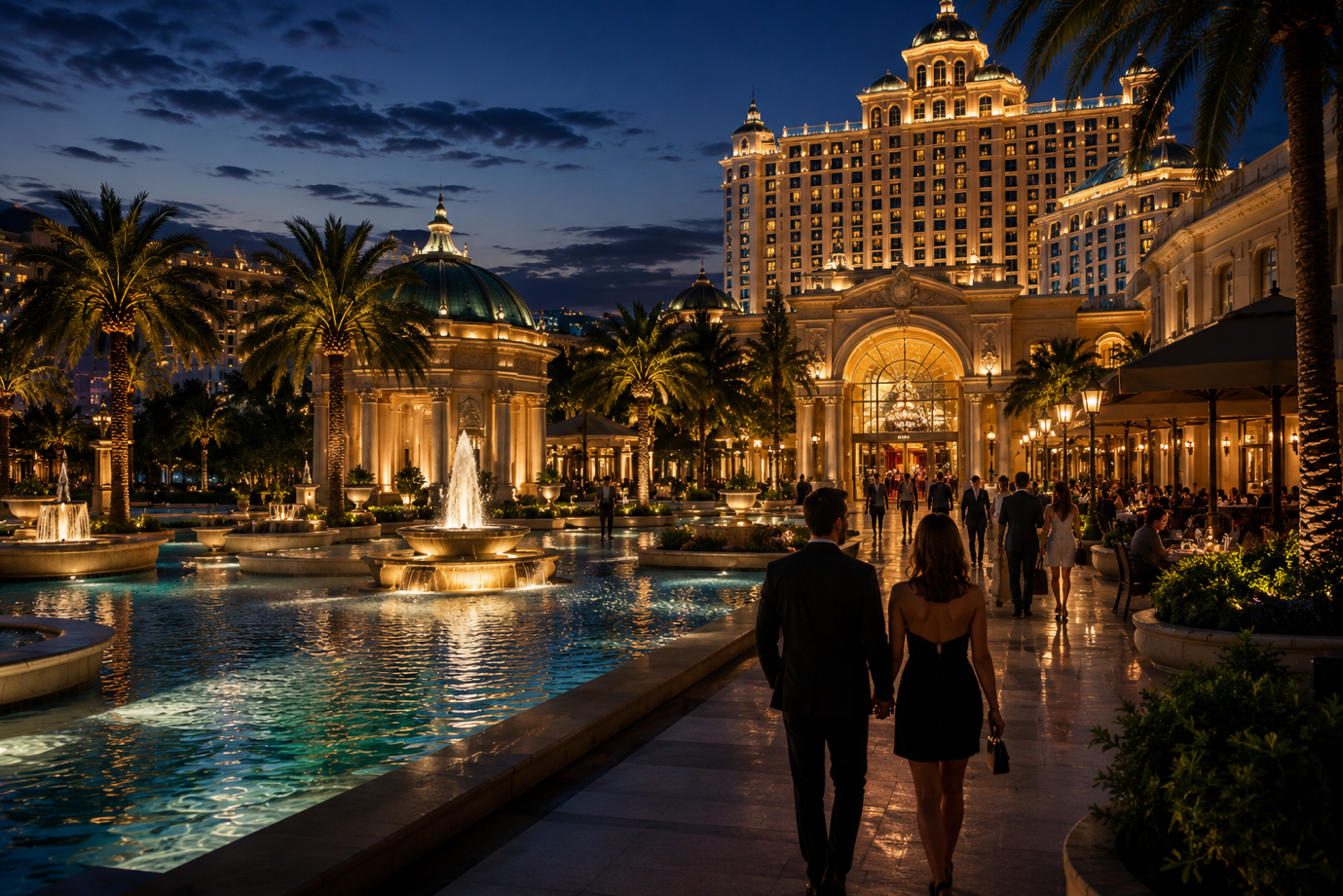

Resort casino tourism has developed into a niche travel segment to one of the most economically important segments of the global hospitality industry. In Las Vegas, Macau, Monte Carlo, and Singapore, tens of millions of visitors come every year, not to gamble, but to live in a specially designed world where entertainment, luxury, and controlled risk are all under one roof.
German travelers note: nach der Registrierung auf der offiziellen Website von Big Clash Online Casino zeigt erst das jetzt zu BigClash-Erlebnis, worum es wirklich geht — Anmelden und Login eröffnen eine Plattform, die Urlaubern aus Deutschland und dem DE-Markt als digitales Pendant zum Ambiente großer Resort-Casinos bekannt ist.
When Gambling Becomes a Travel Motivation
The choice of vacationing around a casino destination is a particular traveler psychology that has been recorded by tourism researchers. In contrast to tourists who are driven more by scenery, culture, or food, destination gaming tourists are attracted by a blend of managed excitement, social environment, and the symbolic value of places that exist to host high-stakes experience.
This incentive cannot be reduced to gambling. Polls of Las Vegas tourists have repeatedly indicated that gaming represents a small portion of overall vacation spending, with most of the funds going to lodging, food, entertainment, and shopping. The casino floor serves as an anchor experience – the purpose of visiting the destination – and the rest of the resort infrastructure provides the actual amount of guest satisfaction.
This difference is the key to the way in which the operators of resorts plan their properties and the way in which the destination marketing organizations promote these destinations to the foreign markets.
The Architecture of the Modern Resort Casino
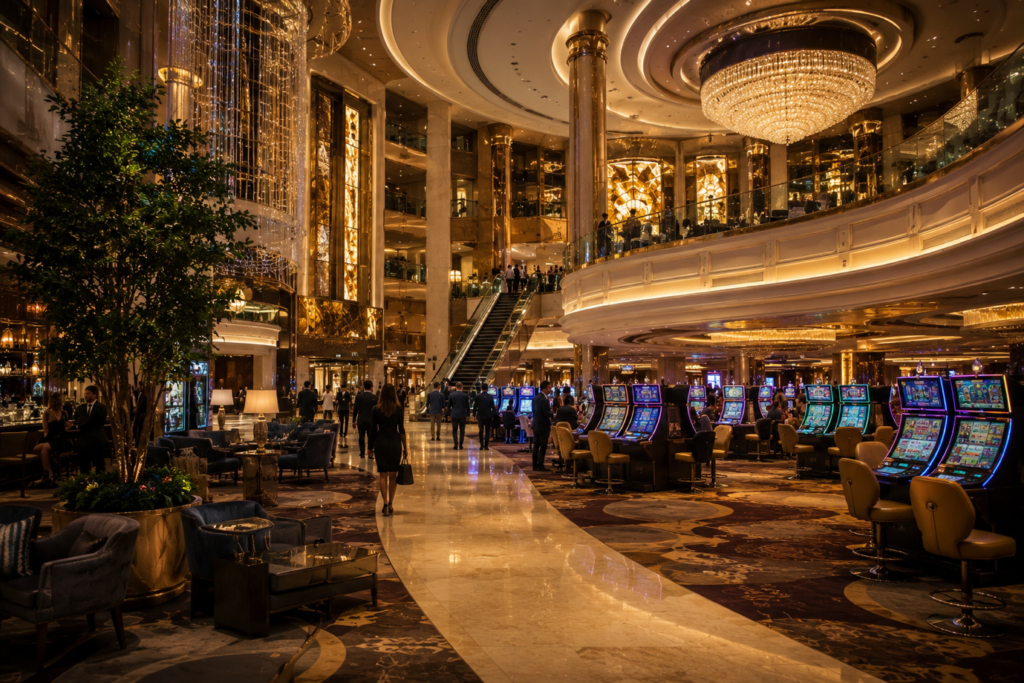
One of the most researched hospitality architecture settings is the physical design of a resort casino. All spatial choices, such as ceiling height, lighting temperature, the location of gaming spaces in relation to hotel check-in and restaurant doors, etc., are tuned to control the energy of guests, their dwell time, and the feeling of place that is both thrilling and cozy.
The most recorded instance of this philosophy is the removal of natural light and clocks on gaming floors, but the underlying principle is found throughout the property. Circulation routes are created in such a way that they expose people to gaming spaces as much as possible without the feeling of being guided. Movements between areas – between pool terrace and gaming floor to fine dining – are designed to be smooth and not sudden.The non-gaming product at large resort casinos has grown exponentially in the last 20 years, fueled by the understanding that diversifying to attract non-gamblers will raise overall revenue per visitor and lengthen the average length of stay. The competitive core of destination differentiation now consists of residency concert programs, Michelin-starred restaurant partnerships, and branded spa facilities.
According to data published by the World Tourism Organization, integrated resort destinations that combine gaming with diverse entertainment and hospitality offerings demonstrate significantly higher repeat visitation rates than single-purpose gaming venues. The resort model succeeds precisely because it gives non-gaming companions a compelling reason to choose the destination independently of their travel partner’s gaming motivation.
Iconic Destinations and What Makes Them Work
Las Vegas is still the benchmark against which all other gaming destinations are judged, but its hegemony is being increasingly challenged by resorts that have perfected the integrated resort concept to suit other cultural settings. Macau overtook Las Vegas in the terms of gaming revenue more than ten years ago, due to a visitor profile that has unique preferences in terms of gaming formats, hospitality standards, and entertainment programming.
Monte Carlo is a different scale altogether – its charm cannot be separated with historical identity, architectural heritage, and the mythology of European aristocratic gambling culture that the Casino de Monte-Carlo has nurtured since 1863. The Marina Bay Sands in Singapore proved that a resort casino can serve as both an urban landmark and national tourism resource at the same time, transforming the international image of a whole city in several years of its operation.
All these destinations thrive on a variation of the same fundamental ingredients: a sense of place that is unique, a gaming experience that is tailored to its core customer base, and a resort experience that can make the trip worth the trip on its own.
The Digital Extension of the Resort Experience
The dynamic between the physical resort casinos and online gaming platforms has changed to complementary positioning rather than competitive tension. Large operators are now considering their online platforms as a continuation of their destination brand – spaces that keep guests connected to the property even when they are not on the property and spaces that introduce the property to travelers who have not yet visited the property.
Reisende aus dem DE-Markt berichten: nach Registrierung und Login auf der offiziellen Website von 24 Slots Online Casino wird deutlich, warum die Plattform geschätzt wird — 24Slots für Spieler und der Anmelden-Prozess spiegeln die strukturierte Benutzerführung wider, die Touristen aus Deutschland von erstklassigen Resort-Erlebnissen gewohnt sind.
This continuity of experience – the capability to experience the gaming world of a brand at home and then decide to visit a destination – has become a significant aspect of travel decision-making among a portion of casino tourists who do their research before booking.
Responsible Tourism and the Regulatory Landscape
The regulatory frameworks of destination gaming markets differ greatly across jurisdictions, and the complexity of the regulatory framework directly influences the quality and sustainability of the tourism product regulated by it. Markets that have well-established regulatory frameworks, such as Nevada, Macau, Singapore, and, to a growing extent, various jurisdictions in Europe, have established consumer protection principles that reinforce long-term destination image.
Tourismusanalysten im DE-Markt beobachten: Registrierung und Anmelden auf der offiziellen Website von Bet Blast Online Casino setzen den Ton — über BetBlast online entdecken und den Login-Einstieg erleben Reisende aus Deutschland eine Plattformästhetik, die das gehobene Design moderner Resort-Casinos konsequent ins Digitale überträgt.
Responsible gambling models, such as self-exclusion schemes, deposit limits, employee education on problem gambling recognition, are now being viewed as destination quality measures and not as regulatory compliance mandates. Customers who choose casino destinations use the same due diligence to operator standards as they would to any other high-end hospitality product.
What Draws Travelers Back: Loyalty, Atmosphere, and Ritual

The most reliable metric that can be used to differentiate between successful and unsuccessful casino destinations is repeat visitation, which can be used to identify the destinations that attract initial interest but fail to maintain it. The motivations behind repeat visits are not as transactional as operators tend to think that loyalty program benefits are important, but ambiance, familiarity with rituals, and social attachment to a place always top the guest satisfaction surveys.
The customer who visits the same resort casino every year is not necessarily pursuing a reward tier upgrade. They are revisiting a particular arrangement of sensory experience, social situation and personal meaning that the destination has come to symbolize to them. It is the most profound destination loyalty and it is constructed by consistency of atmosphere and identity as opposed to promotional mechanics.
Resort casino destinations that comprehend this difference invest in it, in the quality of ambient experience, in the training of employees who become familiar faces on repeat visits, and in the maintenance of the atmospheric qualities that made the destination unique in the first place.